


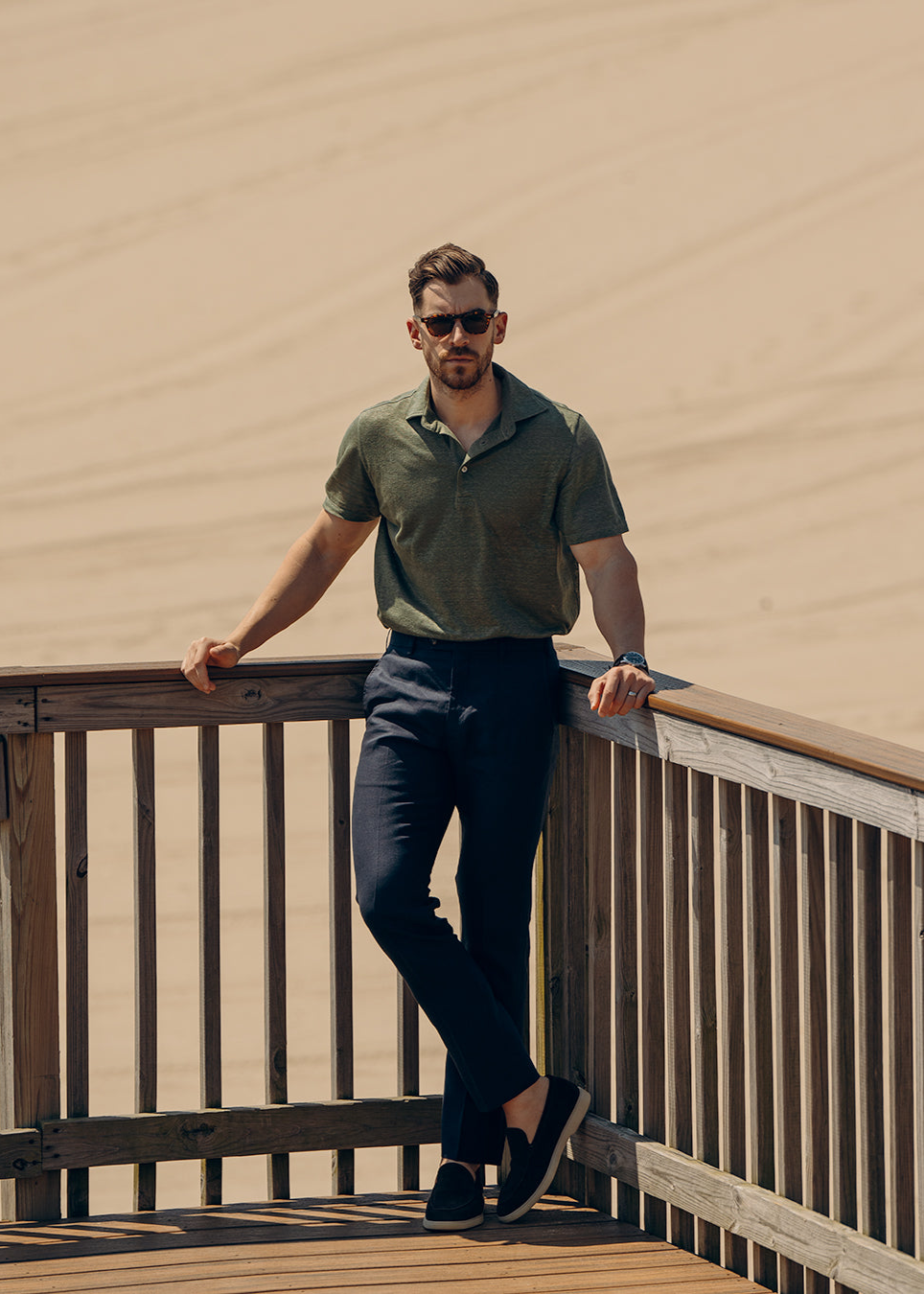




Part 6 of The Wolf vs Goat Guide to Menswear
When someone picks up a pair of trousers, the first things they usually notice are the fabric, the color, and maybe the way the pants feel in their hands. If they know a little about tailoring, they might check the waistband or look at the stitching. I understand that. Those are the things you can see immediately.
But after spending years developing clothing and working with factories in Italy, I've learned that some of the most important decisions are the ones customers rarely think about. How the waistband is constructed, how the pockets are reinforced, how the belt loops are attached, and even which zipper the factory uses all contribute to the finished garment. None of these details automatically makes a pair of trousers exceptional. You still need a good pattern, the right fabric, accurate cutting, and skilled manufacturing. But when you're evaluating the overall quality of a garment, they're worth understanding.
Let's take a closer look at how we approach these details at Wolf vs Goat.
The Waistband Is More Complicated Than It Looks
A waistband might seem like a fairly simple component. It's a strip of fabric attached to the top of the trousers, right? Not exactly. There are several ways to construct a waistband, and the method you choose influences its appearance, structure, and how it behaves when worn.
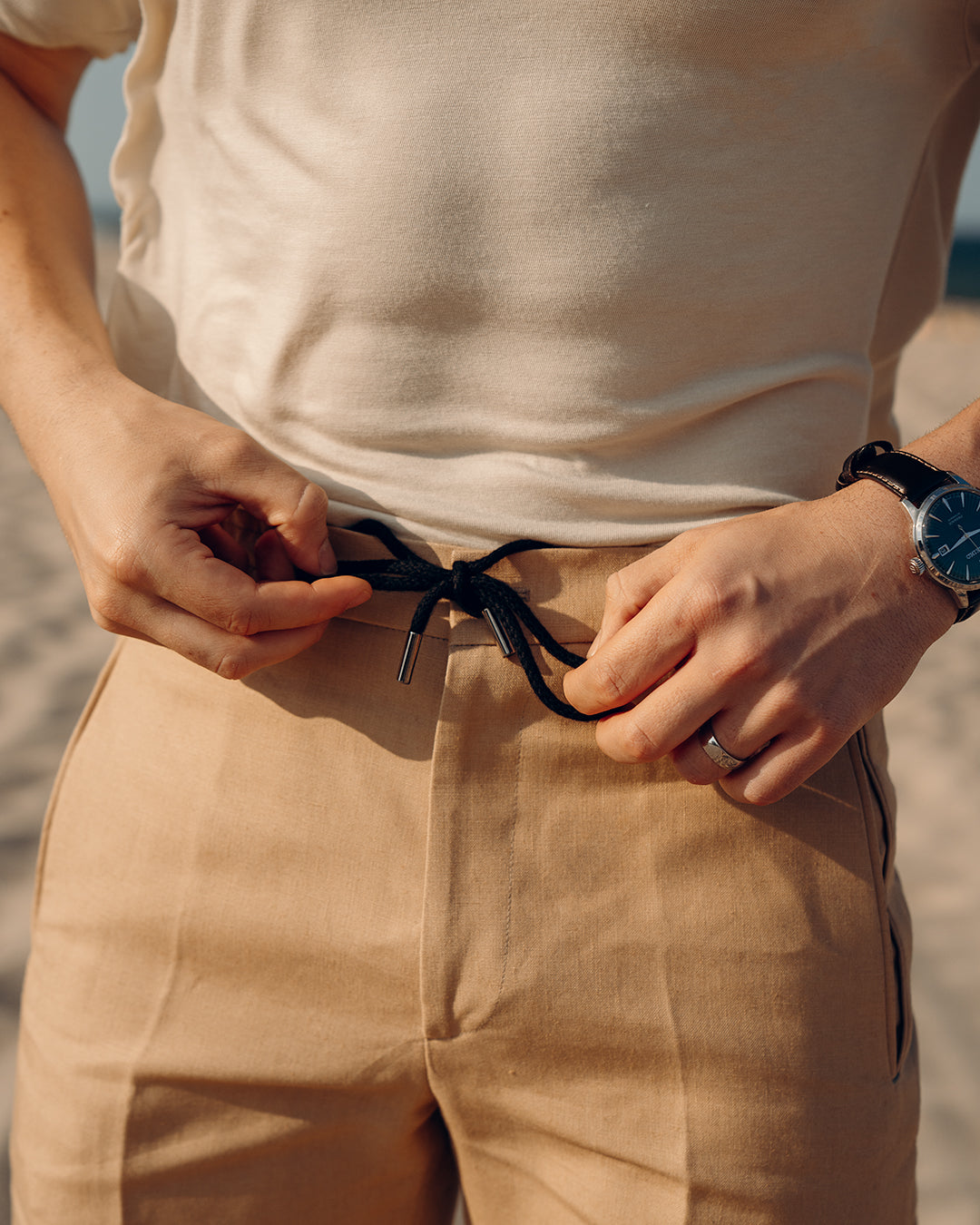
Our tailored trousers use a curtain waistband construction with internal cotton canvas reinforcement. The curtain is the interior finishing you see when you turn the waistband over and look inside the garment. The internal construction helps support the waistband and maintain its intended shape. It also provides a finished interior rather than leaving the construction exposed.
This is an area where fabric selection and pressing matter as well. A waistband has to follow the body, and during production our operators shape it rather than simply pressing it flat. The objective is a waistband that looks clean, has the appropriate structure, and sits comfortably when the trousers are properly fitted.
Why We Use a Split-Back Waistband
If you look at the center back of our tailored trousers, you'll notice that the waistband is split. This isn't a decorative feature. The split-back construction is associated with tailored trousers and helps accommodate alterations at the center-back seam, provided the garment has sufficient seam allowance.
We deliberately make our trousers with tailoring in mind. Different customers have different waist and seat proportions, and even someone who wears a standard size may benefit from a small adjustment. A split-back waistband is one part of that approach.
It doesn't mean every alteration is possible, and it certainly doesn't mean you should buy trousers that are several sizes too large or too small. It simply gives the tailor a construction that's intended to accommodate certain adjustments. Considering that our trousers are also supplied with unfinished hems, we expect the customer and tailor to make those final decisions together.
Belt Loops Should Be Properly Secured
Belt loops are another detail most people never think about until one comes loose. On our trousers, the belt loops are tucked into the waistband construction and secured with machine bar tacks. A bar tack is a concentrated group of stitches used to reinforce an area that may experience repeated stress.
Belt loops are an obvious place for this kind of reinforcement because they can be pulled when someone adjusts their trousers or wears a belt. The important thing isn't whether the stitches were made by hand or machine. It's whether the attachment method is appropriate and the work has been executed properly. We use machines for this operation because they produce the reinforcement we're looking for. There's no reason to pretend otherwise.
Pockets Take More Abuse Than You Think
Think about how often you put your hands into your pockets during the day. You're sitting, standing, walking, reaching for your phone or keys, and occasionally pulling against the pocket opening without even realizing it. All that activity places stress on certain areas of the pocket construction, which is why our trousers have reinforcement at the appropriate pocket stress points. The purpose is straightforward: reduce the likelihood of stitches failing where the pocket is repeatedly pulled or loaded.
Pocket placement is also something we consider during pattern development. As I mentioned in our previous article about fit, I pay attention to the distance between the back pockets and how they sit on the body. A pocket can be beautifully sewn and still look wrong if its placement doesn't work with the pattern. Construction and design have to work together.
Crotch Reinforcement
The crotch is one of the areas of a trouser that experiences repeated movement and stress. Every time you sit, walk, bend, or climb stairs, the fabric and seams in that area are being subjected to movement and tension. Our trousers incorporate crotch reinforcement as part of their construction. This is a practical detail intended to support an area that receives considerable wear.
Of course, reinforcement doesn't make a poorly fitting trouser fit properly. If your pants are excessively tight through the crotch or thigh, you're still going to place unnecessary strain on the garment. That's another reason I spend so much time talking about fit. You can use excellent fabric and reinforce the appropriate areas, but the garment still needs enough room to function as intended.
The Heel Guard
A heel guard, sometimes called heel tape or kick tape, is another practical detail you may find on tailored trousers. It’s fitted inside the finished hem to help protect the cloth from abrasion where it comes into contact with footwear.
“We don’t currently include heel guards on our trousers, but they’re worth understanding when you’re evaluating construction. Like the other details discussed here, a heel guard serves a specific purpose. Its absence doesn’t automatically mean a trouser is poorly made, and its presence doesn’t guarantee quality. What matters is whether it’s appropriate for the garment and properly fitted.
Buttons, Zippers, and Trims
Fabric gets most of the attention when people discuss expensive clothing, but the smaller components deserve consideration too. For our trousers, we use horn and corozo buttons, depending on the design. Horn is a natural material, and corozo is derived from the seeds of certain palms. Both can be made into attractive, functional buttons, although their characteristics and appearance differ.
For our fly zippers, we use several options depending on the trouser and the requirements of the design. These include YKK Excella, Italian-made Blitzstar high-polish zippers, and, on occasion, Riri. We particularly appreciate Blitzstar because the zippers are produced locally in Italy and the quality is excellent. Being able to source such a well-made component close to our production is something we value.
I'm not going to tell you that a particular zipper brand automatically makes a garment luxurious. What matters is selecting a zipper that's appropriate for the application and ensuring that it's installed correctly. The same principle applies to buttons, thread, reinforcement materials, and the other components used during production. When we're sourcing trims, we're thinking about function, appearance, compatibility with the fabric, and the overall standard of the garment. Those decisions are part of the cost of making clothing properly, even though they're rarely the first things a customer notices.
The Inside of the Trouser Matters Too
One thing I encourage people to do when evaluating clothing is turn the garment inside out. Look at how the components are assembled, the seam finishing, the waistband construction, the pocket attachments, and the areas where different pieces of fabric come together. You don't need to be a tailor to appreciate clean, consistent workmanship.
That said, don't assume that every visible stitch or every internal construction method has to look the same. Different garments require different techniques, and there are multiple legitimate ways to achieve a durable, well-finished result. What I care about is whether the construction is appropriate for the garment and whether it has been executed correctly.
Our trousers are produced in Southern Italy by experienced trouser makers, using specialized machinery and skilled operators. Throughout construction, the pieces are pressed after joining operations, with the pressing method adjusted to the particular seam and fabric. By the time a pair reaches its final pressing and inspection, a considerable amount of work has already gone into details that most customers will never see.
Why These Details Affect the Price
I talk about fabric costs quite a bit because they're a significant part of our business. We work with mills such as Loro Piana, Vitale Barberis Canonico, Dormeuil, Tollegno, Zegna Cloth, Botto Giuseppe, and Scabal. But the fabric is only one part of the equation.
There are also the trims, the pattern development, the sampling, the cutting, the sewing, the pressing, the quality control, and all the individual operations required to make the finished garment. Some construction details require additional materials. Others require additional labor or specialized equipment. When you add everything together, those decisions influence the manufacturing cost.
That doesn't mean every expensive pair of trousers is well made. Price alone isn't proof of quality, and a long list of construction features doesn't guarantee a successful garment. What matters is how those decisions contribute to the finished product. I'd rather spend money on the correct fabric, good trims, a properly developed pattern, and skilled manufacturing than on details that sound impressive but don't improve the garment.
What I Want Customers to Understand
I don't expect everyone who buys Wolf vs Goat trousers to know what a curtain waistband is or why a belt loop is bar-tacked. You shouldn't need a background in garment manufacturing to buy a good pair of pants. But I do think it's worth understanding what you're paying for.
When you look beyond the fabric and the label, you start to recognize the amount of work involved in making a garment properly. You also become better equipped to distinguish between a genuine construction feature and something that's being used primarily as a selling point. The more you learn about clothing, the easier it becomes to ask useful questions.
That's really the purpose of this series. I want customers to understand the garments they're buying, whether they're buying them from Wolf vs Goat or somewhere else. Good clothing should hold up to that kind of scrutiny.
Explore our trousers and put these details into context.
What We're Exploring Next
Next in The Wolf vs Goat Guide to Menswear, we're going to discuss trouser alterations and what you should know before visiting a tailor.
We'll cover which adjustments are relatively straightforward, which can become complicated, and why some fit problems are better solved by choosing a different size or pattern. We'll also look at how to decide on trouser length, what to bring to your fitting, and why a good relationship with a tailor can make a significant difference in how your clothing looks and feels.