


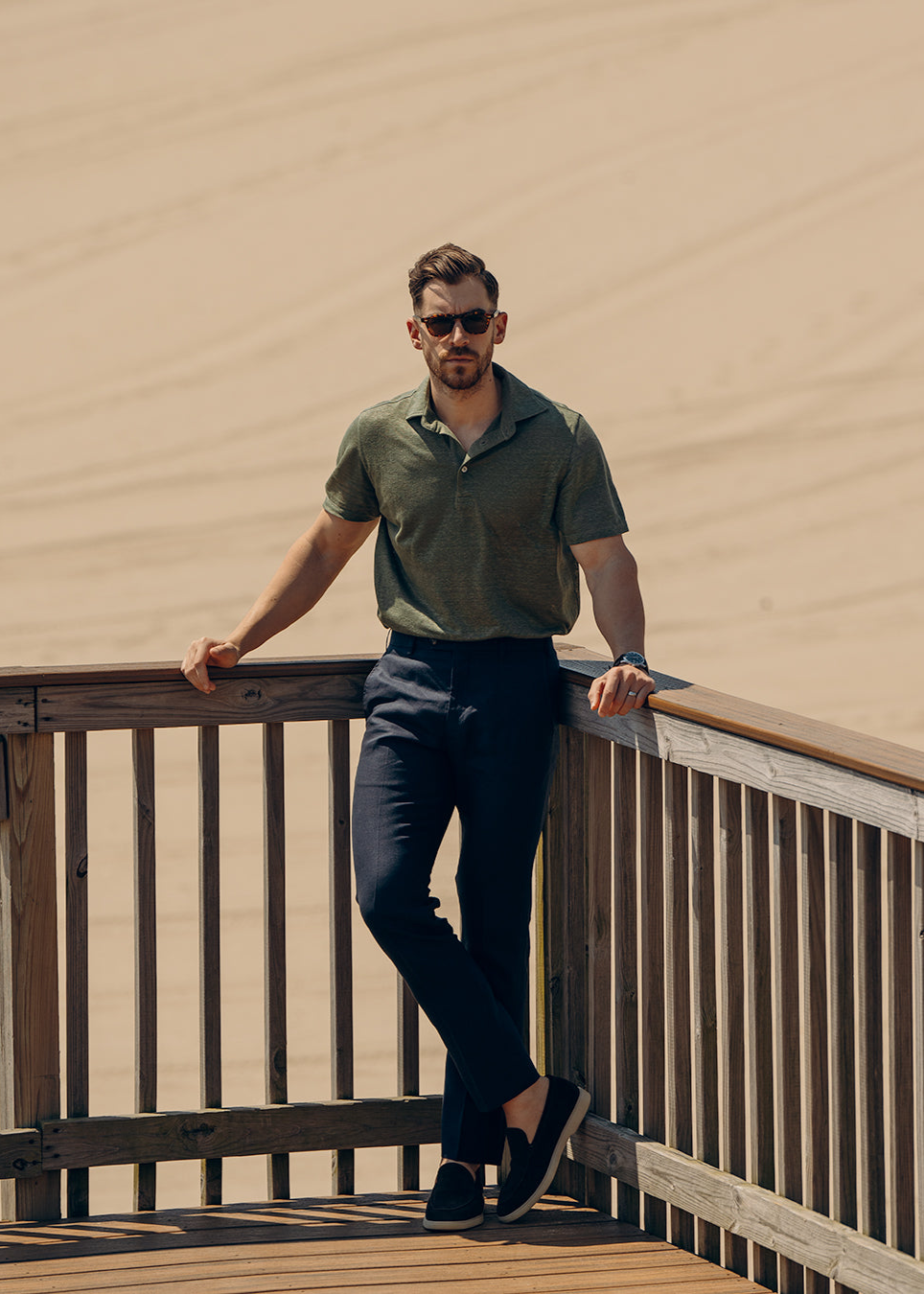




A great sweater should not sit in your closet waiting for the perfect occasion. It should be the piece you reach for because it makes getting dressed easier.
That is why the cashmere sweater vs wool sweater question matters. This is not just a fabric debate. It is a buying decision. You are choosing how a sweater will feel, how warm it will be, how often you will wear it, how much care it will need, and how well it will fit into the rest of your wardrobe.
We make both, so we do not have a side in this fight. Cashmere has the reputation. Wool has the range. Both can be excellent, and both can disappoint when the garment is poorly made or chosen for the wrong job.
The short answer: if you want softness, lightweight warmth, and quiet luxury, buy cashmere first. If you want structure, durability, and a sweater you can wear constantly, buy wool first. The rest of this guide explains how to know which one you actually are.
Cashmere Sweater vs Wool Sweater: The Simple Difference
A cashmere sweater is made from the soft undercoat of cashmere goats. That fiber is light, soft, warm, and refined. When cashmere is good, it feels noticeably different from ordinary knitwear — a plushness that makes even a simple crewneck feel elevated.
A wool sweater is usually made from sheep's wool, though wool varies widely by breed, fiber grade, yarn, knit, and finish. Some wool is rugged and dense. Some, like fine merino, is smooth enough for frequent wear against the skin.
The important thing is that cashmere and wool are not two versions of the same sweater. Cashmere prioritizes softness and warmth without bulk. Wool offers structure, resilience, and everyday utility. The label tells you the category. The garment tells you the truth.
That is why we organize our collections by material — cashmere, wool, silk, linen, and luxury cotton. Fabric changes the entire wearing experience.
Which Sweater Feels Softer?
Cashmere, usually. That soft, almost brushed hand feel is why most men buy their first cashmere sweater and immediately understand the reputation. It works especially well close to the skin, which makes it ideal for crewnecks, turtlenecks, scarves, beanies, and lightweight layering pieces — and in blends, where it brings softness to polos, tees, and sweatshirts.
Wool can still be soft. Fine merino, quality lambswool, and carefully finished wool knits feel smooth, dry, and comfortable. The old idea that all wool itches is outdated: poor wool itches, good wool does not.
The real difference is character. Cashmere feels plush and indulgent. Wool feels cleaner, springier, and more structured. If your priority is the softest possible sweater, start with cashmere. If you want refinement with more body, look at wool.
Which Sweater Is Warmer?
Cashmere is often warmer than standard wool by weight, which means serious insulation without bulk. You can wear a cashmere crewneck under a jacket or coat without your shoulders feeling stuffed. That makes it the choice for men who want warmth but hate heavy layers.
Wool can be very warm too, especially in heavier knits, and a dense wool sweater feels more substantial and protective in real cold while holding its shape through the day.
So the warmth question depends on the job: warmth with lightness, cashmere. Warmth with structure and body, wool.
Which Sweater Lasts Longer?
Wool, generally — it recovers well, keeps its shape, and tolerates frequent rotation. It is the safer choice for a sweater you plan to wear constantly with minimal thought.
Cashmere can last for years, but it asks for better habits. Fold it instead of hanging it. Let it rest between wears. Wash it carefully. It may pill where there is friction — under the arms, where a bag strap rubs.
But durability is not only about fiber. It is also about construction. A dense, well-knit cashmere sweater will outlast a loose, flimsy one, and a cheap wool sweater can lose its shape faster than well-made cashmere. Yarn quality, knit tension, seams, and finishing matter as much as what is on the label.
Merino deserves its own mention because it is the most wearable wool for most men. It is finer and softer than traditional wools, breathable, temperature-regulating, and comfortable across seasons — which makes it the more performance-oriented choice for travel, frequent wear, and knit polos.
Cashmere feels more plush and luxurious. Merino feels cleaner and harder-working. If you want indulgence, cashmere. If you want a knit that shrugs off constant use and changing temperatures, merino is the better call.
Which Sweater Looks More Expensive?
Cashmere looks expensive in a quiet way. No shine, no pattern, no branding — the luxury is in the surface, drape, and restraint. A well-fitting cashmere sweater with denim, trousers, or chinos makes a simple outfit look intentional.
Wool looks expensive when the structure is right. A good wool sweater has body, holds a cleaner silhouette, and makes a casual outfit look sharper without feeling dressed up.
If your style is soft, relaxed, and understated, cashmere suits you. If you like sharper lines, knit polos, and structured layers, wool fits more naturally. You can see that difference across our sweaters and tops — fabric choice affects not just warmth but silhouette.
Cashmere vs Wool for Everyday Wear
For everyday wear, wool is usually more practical: easier to rotate, easier to dress up or down, better at holding shape through repeated use. A wool sweater or knit polo works for the office, dinner, travel, and weekends without feeling delicate.
Cashmere can absolutely be an everyday piece if you choose the right garment. A cashmere scarf, beanie, crewneck, or cashmere-blend polo slots easily into regular wear. If you wear knitwear a couple of times a week and rotate pieces, cashmere is a practical luxury. If you wear the same sweater daily, throw it over chairs, and wash without thinking, buy wool.
The smartest wardrobe uses both. Wool for rotation. Cashmere for softness. Blends for balance.
Cashmere vs Wool for Travel
Wool is usually the better travel sweater: resilient, versatile, happy on a plane, at dinner, in a meeting, or walking a city. Cashmere is the better travel comfort piece: warm, light, easy to layer, and kind to you on a long flight. Just pack it properly — folded, not crushed under shoes or snagged by zippers.
The smart setup is both: a wool sweater or knit polo as the reliable rotation piece, cashmere as the comfort layer.
Which Is Better for Layering?
Under outerwear, cashmere wins — a fine cashmere crewneck or turtleneck adds real warmth without crowding the outfit. As the visible statement layer, wool often has the edge: a wool cardigan, polo, or heavier crewneck creates structure over a shirt and can act almost like a soft jacket.
Which Is Easier to Care For?
Wool is more forgiving, but both want the same basics: wash less, air out more, fold your knits, avoid heat, store them clean.
For cashmere, be gentler. Hand wash or use a delicate cycle with the right detergent (the care label wins), reshape flat to dry, and keep a sweater comb for light pilling. For wool, avoid aggressive agitation and heat — wool can shrink or felt when treated carelessly.
The goal is simple: protect the fiber, preserve the shape, keep the garment in rotation for years. Luxury does not mean maintenance-free. It means worth maintaining.
What About Cashmere Blends and Wool Blends?
Blends are how you get the strengths of multiple fibers. A cotton-cashmere sweatshirt feels softer than standard cotton while staying casual. A bamboo-cashmere polo brings softness to a piece that is not a traditional sweater. A cashmere-silk tee feels smoother and lighter than an ordinary tee. Wool blends can improve drape, breathability, or weight.
The test is purpose. A good blend makes the garment better. A bad blend exists so the product name sounds more luxurious. Our best sellers are a useful place to compare this in practice — premium staples across wool, cashmere blends, silk, linen, and cotton, chosen by what people actually wear.
How to Choose Your First Premium Sweater
Start with your real wardrobe, not the fantasy version of it.
If you live in denim, chinos, and simple outerwear, a cashmere or wool crewneck is the easiest starting point. If you want something sharper than a sweatshirt but less formal than a button-up, a wool polo or cashmere-blend polo earns more wear. If you already wear coats and jackets often, a cashmere turtleneck or fine-gauge sweater layers beautifully underneath. And if you are not ready to commit to a full sweater, a cashmere scarf or beanie will teach you what the fuss is about for the least money.
The best first purchase is not the most luxurious one. It is the one that earns the most wear. (For the full breakdown of when cashmere justifies its price — and when it does not — see our guide on whether cashmere is worth it.)
When to Buy Cashmere First
Buy cashmere first if you care most about softness, comfort, and lightweight warmth — or if you want a sweater that makes simple outfits feel more refined. It is the right call if you already own reliable basics and want to upgrade how your wardrobe feels, and it is the obvious call if you hate bulk. Start with our cashmere collection.
When to Buy Wool First
Buy wool first if you want structure, durability, and frequent wear. A wool sweater, polo, or cardigan is the better foundation for a knitwear rotation: practical, versatile, easy to dress up or down, and strong for travel. Start with our wool collection.
The Best Answer Is Usually Both
Cashmere gets more attention. Wool often does more work. That is the honest answer.
A strong wardrobe has room for both because they solve different problems: cashmere for softness, light warmth, and quiet luxury; wool for structure, resilience, and repeat wear; blends to bridge the gap. Once you understand that, buying knitwear gets much easier — you stop chasing the most luxurious-sounding label and start choosing the right fabric for the job.
Final Verdict: Cashmere Sweater or Wool Sweater?
Choose a cashmere sweater if you want the softest feel, lightweight warmth, and a more elevated everyday layer. Choose a wool sweater if you want structure, durability, and a piece you can wear often across more situations. Choose a blend if you want softness and practicality in one garment.
The best sweater is not the one with the most impressive label. It is the one you keep reaching for. Explore our cashmere collection, compare it with our wool collection, or browse best sellers to see what other men keep reaching for.
Frequently Asked Questions
Is a cashmere sweater better than a wool sweater? A cashmere sweater is usually softer and lighter, while a wool sweater is more structured and durable. Cashmere is better for softness and lightweight warmth. Wool is better for frequent wear and shape.
Which sweater is warmer, cashmere or wool? Cashmere is often warmer than standard wool by weight, but heavier wool sweaters can feel warmer overall because they have more density and structure.
Which sweater lasts longer? Wool sweaters usually last longer under frequent wear because wool is more resilient. Well-made cashmere can also last for years with proper care — construction matters as much as fiber.
Does cashmere pill more than wool? Cashmere can pill, especially softer or looser knits, in areas of friction. Some pilling is normal and manageable with a sweater comb. Heavy, immediate pilling suggests weak yarn or loose construction.
Should I buy cashmere or merino wool? Buy cashmere for a softer, more luxurious feel. Buy merino for a smoother, harder-working knit suited to frequent wear, travel, and temperature swings.
Can I wear a cashmere sweater every day? You can wear cashmere regularly, but rotate it and let it rest between wears. For true daily abuse, wool or cashmere blends are easier.