


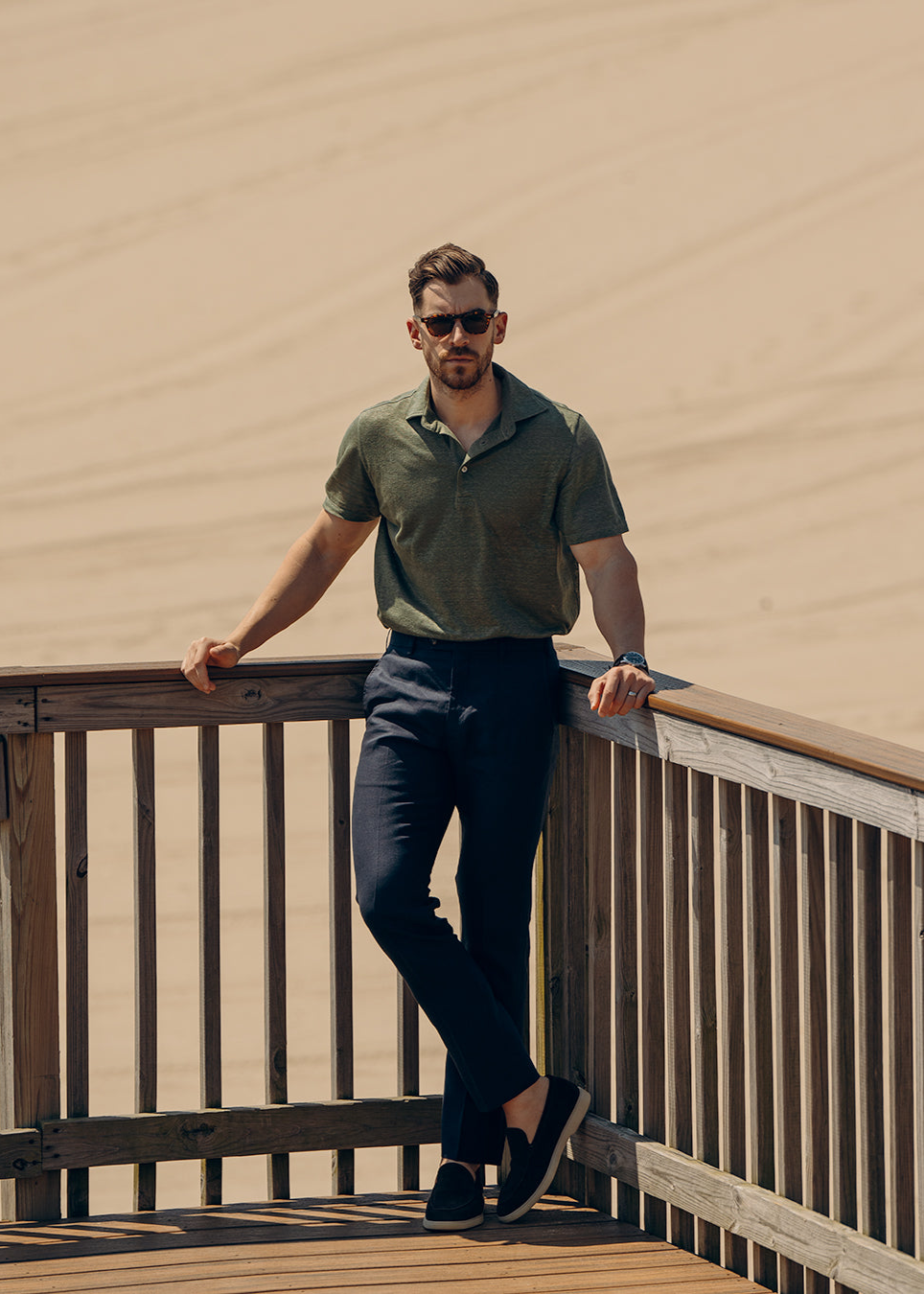




Cashmere has a reputation.
Soft. Warm. Expensive. Luxurious.
But reputation alone does not make a sweater worth buying.
A good cashmere piece should earn its place in your wardrobe. It should feel noticeably better than ordinary knitwear. It should be easy to wear, not something you save for one perfect occasion. It should work with what you already own. And if you are paying for premium materials, the garment should offer more than a label that says "cashmere."
So, is cashmere worth it?
Yes, when the fabric quality, construction, fit, and use case line up.
No, when it is thin, flimsy, poorly made, overhyped, or bought for the wrong reason.
That is the real answer. Cashmere can be one of the best materials in a man's wardrobe, but only when you understand what you are buying and how you will actually wear it.
This guide breaks down when cashmere is worth the investment, when wool or blends may make more sense, and how to choose pieces that feel luxurious without becoming precious.
What Makes Cashmere Different?
Cashmere comes from the soft undercoat of cashmere goats. That undercoat is prized because it can create knitwear that feels soft, warm, and light at the same time.
That combination is what makes cashmere appealing.
A good cashmere sweater does not need to be bulky to keep you warm. A cashmere scarf can feel substantial without feeling heavy. A cashmere beanie can provide warmth without the roughness some men associate with traditional wool. A cashmere-blend tee or polo can make a casual piece feel more refined without looking flashy.
That is the quiet advantage of cashmere. It adds comfort and polish without announcing itself too loudly.
Wolf Vs Goat's Cashmere Collection includes cashmere sweaters, turtlenecks, scarves, beanies, cashmere-silk tees, cotton-cashmere sweatshirts, and bamboo-cashmere polos, which shows how versatile the material can be across different wardrobe categories.
Cashmere is not just for one heavy winter sweater anymore. It can show up in layers, accessories, knit polos, tees, and elevated casual pieces.
Why Cashmere Costs More
Cashmere usually costs more because the fiber is rarer, finer, and more difficult to produce than standard wool or cotton.
But price does not automatically equal quality.
This is where buyers need to be careful. The word cashmere can be used to sell everything from excellent knitwear to weak, loosely constructed pieces that do not hold up. A sweater can be technically cashmere and still not feel substantial. It can be soft at first touch but lose shape quickly. It can pill heavily because the yarn or knit structure is not strong enough.
The better question is not, "Is this cashmere?"
The better question is, "Is this a well-made garment that uses cashmere in a way that improves how it feels, wears, and fits?"
That difference matters.
A great cashmere piece should feel soft, but it should also feel intentional. The knit should have enough body for the type of garment. The seams should be clean. The fit should make sense. The piece should work in your real wardrobe.
When cashmere is used well, the higher cost feels justified. When it is used as a marketing word, it does not.
When Cashmere Is Worth It
Cashmere is worth it when you want softness, warmth, and comfort in a piece you will wear often.
It makes the most sense for garments that benefit from a softer hand feel. Sweaters, turtlenecks, scarves, beanies, knit polos, and elevated casual layers are all strong candidates. These are pieces where touch matters. You feel them on your neck, arms, chest, or skin. If the fabric feels better, the whole garment feels better.
Cashmere is also worth it when you want warmth without bulk.
A good cashmere crewneck can sit under a jacket or coat without making the outfit feel stuffed. A cashmere scarf can add warmth without weight. A cashmere beanie can be practical and elevated at the same time.
It is especially useful for men who like simple outfits.
Cashmere does not need much styling. A well-fitting cashmere sweater with trousers, denim, or chinos already feels considered. A cashmere scarf can make a basic coat look more complete. A soft knit polo can make casual dressing feel sharper without becoming formal.
That is one of the best reasons to buy cashmere. It makes easy outfits look better.
When Cashmere May Not Be the Best Choice
Cashmere is not always the right answer.
If you want something you can wear hard, throw in a bag, hang carelessly, wash without thought, and repeat every week, cashmere may not be the best fabric for that job.
Cashmere is softer and often more delicate than many wool knits. It can pill. It can stretch if hung improperly. It can lose shape if washed aggressively. It does not need to be babied, but it does need better habits.
That is why wool can sometimes be the smarter choice.
Wolf Vs Goat's Wool Collection includes superfine wool tees, wool henleys, wool cardigans, wool polos, crewneck sweaters, scarves, trousers, and heavier knits. Those are categories where structure, resilience, and shape matter.
If you are choosing between a cashmere sweater and a wool sweater, think about how you will wear it.
For softness and light warmth, cashmere wins.
For frequent wear and structure, wool may be better.
For balance, a blend can be the smartest option.
That is why the best wardrobe is not built around one material. It is built around purpose.
Cashmere vs Wool: Which Should You Buy First?
If you are comparing cashmere vs wool, start with your lifestyle.
Do you want something soft and warm for dinners, travel, layering, and quiet luxury? Cashmere is probably worth it.
Do you want something structured, durable, and easy to wear often? Wool may be the better first purchase.
Do you want casual comfort with a more elevated feel? A cotton-cashmere, bamboo-cashmere, or cashmere-silk blend may give you the best mix.
This is where Wolf Vs Goat's broader Luxury Fabrics approach is useful. Cashmere is part of the story, but not the whole story. Wool, silk, linen, cotton, and fabric blends each solve different wardrobe problems.
A good cashmere piece should not replace every other material in your closet. It should fill the role cashmere is best at: soft warmth, comfort, and refinement.
The Best First Cashmere Piece for Men
If you are buying your first cashmere piece, do not start with something you will rarely wear.
Start with a piece that fits your existing wardrobe.
A cashmere crewneck is one of the easiest first buys. It works over a T-shirt, under a jacket, with denim, with trousers, or layered under outerwear. It can be dressed up without feeling stiff.
A cashmere turtleneck is stronger if your style already leans refined. It has more presence than a crewneck and works well under coats and jackets.
A cashmere scarf is a low-risk entry point. It gives you the softness and warmth of cashmere without requiring you to build an outfit around it.
A cashmere beanie works for the same reason. It is practical, wearable, and easy to rotate.
A cashmere-blend polo or tee is ideal if you want softness but live in casual pieces. Wolf Vs Goat carries bamboo-cashmere polos and cashmere-silk tees in the Cashmere Collection, which gives cashmere a more everyday role.
The best first piece is not necessarily the most expensive one. It is the one you will actually wear.
Are Cashmere Blends Worth It?
Cashmere blends can absolutely be worth it.
In some cases, a blend is more useful than pure cashmere.
A cotton-cashmere sweatshirt or hoodie can feel softer and more elevated than standard cotton while still behaving like a casual everyday piece. A bamboo-cashmere polo can bring softness into warm-weather or transitional dressing. A cashmere-silk T-shirt can feel smoother and more refined than an ordinary tee.
The key is whether the blend has a purpose.
A good blend should improve the garment. It might add softness, reduce bulk, improve drape, support breathability, or help the piece hold its shape.
A bad blend is just a marketing trick.
When looking at blends, ask what the fabric is doing. If the garment clearly benefits from the combination, the blend can be a smart buy. If the cashmere content exists only so the product name sounds premium, move on.
How to Know If a Cashmere Sweater Is Good Quality
You do not need to be a textile expert to make a better cashmere purchase.
Start with feel, but do not stop there.
A good cashmere sweater should feel soft, but it should not feel weak. It should have enough body for the style. It should not feel like it will collapse after a few wears. The knit should look even. The seams should be clean. The neckline, cuffs, and hem should recover after light stretching.
Fit matters too.
Luxury knitwear should not rely on the fabric alone. The shoulder, chest, sleeve, and length all need to work. A beautiful material cannot save a poor silhouette.
Also think about transparency. Does the brand give you enough information about the fabric, construction, or garment category? Does the product sit within a broader point of view, or does it feel like a random cashmere item added to chase demand?
Wolf Vs Goat's site emphasizes fit, fabric, and finish across its luxury men's apparel, and its collections are organized around materials and garment types, including Tops, Accessories, Sweaters & Sweatshirts, wool, cashmere, linen, silk, and cotton. That kind of structure helps shoppers compare pieces by how they will actually be worn.
Does Cashmere Pill?
Yes, cashmere can pill.
Pilling happens when fibers rub together and form small balls on the surface of the fabric. It is common in soft knits, especially in areas with friction: underarms, sides, cuffs, and anywhere a bag strap rubs.
Some pilling is normal. Heavy, immediate, excessive pilling is not ideal.
A sweater comb can help maintain the surface. So can rotating your knitwear instead of wearing the same piece nonstop. Letting cashmere rest between wears gives the fibers time to recover.
Do not judge cashmere only by whether it pills at all. Judge it by how it wears over time, how it recovers, and whether the garment still feels good after maintenance.
Luxury does not mean maintenance-free. It means worth maintaining.
How to Care for Cashmere So It Lasts
Cashmere care is mostly about avoiding abuse.
Do not hang cashmere sweaters for long periods. Fold them. Hanging can stretch the shoulders and distort the shape.
Do not use high heat. Heat can shrink or damage delicate fibers.
Do not wash after every wear unless the garment truly needs it. Air it out between wears.
Do not toss it into a crowded drawer with zippers, rough fabrics, or sharp edges.
Use the care label as your rulebook. If a piece calls for hand washing, delicate washing, or dry cleaning, follow that guidance. When drying, reshape the garment and lay it flat.
For storage, make sure the piece is clean before putting it away for the season. Fold it neatly. Keep it protected.
Good care does not need to be complicated. It just needs to be consistent.
Is Cashmere Worth It for Everyday Wear?
Cashmere can be worth it for everyday wear if you choose the right type of garment.
A delicate cashmere turtleneck may not be your everyday workhorse. But a cotton-cashmere sweatshirt, bamboo-cashmere polo, cashmere-silk tee, scarf, or beanie can fit naturally into a regular rotation.
This is why "everyday luxury" is a better way to think about cashmere than "special occasion luxury."
The goal is not to own something expensive and never wear it.
The goal is to own something better and reach for it often.
If a cashmere piece makes your normal outfits feel better, it is doing its job.
Cost Per Wear: The Smarter Way to Think About Cashmere
A cheap sweater you wear twice is expensive.
A premium sweater you wear for years can be practical.
That is the cost-per-wear argument for cashmere. The upfront price may be higher, but if the piece becomes part of your real wardrobe, the value improves over time.
This only works if you buy well.
Choose a color you will wear. Choose a silhouette that fits your life. Choose a garment type you already understand. If you never wear turtlenecks, do not make your first cashmere purchase a turtleneck just because it looks elegant on someone else. If you live in polos and tees, start there. If you wear scarves all winter, a cashmere scarf makes immediate sense.
Wolf Vs Goat's Best Selling collection is a useful place to study what fits into real wardrobes because it includes customer favorites across wool polos, bamboo-cashmere polos, cotton-cashmere shirts, silk pieces, linen styles, and everyday premium basics.
Cashmere is worth it when it becomes a piece you use, not a piece you admire from a distance.
Who Should Buy Cashmere?
Cashmere makes sense for men who care about feel, fabric, and understated quality.
It is a strong fit if you prefer fewer, better pieces. It works if you want clothing that feels comfortable but still looks refined. It makes sense if you dress simply and want the fabric to carry more of the outfit.
Cashmere is also ideal if you dislike bulky winter layers. It gives warmth without turning every outfit into a heavy stack of fabric.
It may not be right if you want zero-maintenance clothing, if you are rough on knits, or if you are only buying it because the word sounds luxurious.
Buy cashmere because it solves a wardrobe problem.
Softness. Warmth. Comfort. Polish. Better layering. Better travel. Better everyday dressing.
Those are good reasons.
The Final Verdict: Is Cashmere Worth It?
Cashmere is worth it when it is well-made, well-chosen, and worn often.
It is not worth it when the garment is flimsy, poorly constructed, or bought just for the label.
For most men, the smartest approach is simple: start with one cashmere piece that fits your actual wardrobe. A crewneck, scarf, beanie, knit polo, or cashmere-blend tee can all be strong first choices. Then build around use.
If you want maximum softness and lightweight warmth, cashmere is hard to beat.
If you want structure and frequent wear, wool may be better.
If you want balance, look at blends.
The best wardrobe does not choose materials by hype. It chooses them by purpose.
Explore Wolf Vs Goat's Cashmere Collection, compare it with the Wool Collection, or browse Best Selling pieces to find knitwear that fits how you actually dress.
Frequently Asked Questions
Is cashmere really better than wool?
Cashmere is usually softer and lighter than standard wool, but wool is often more structured and resilient. Cashmere is better for softness and lightweight warmth. Wool is better for frequent wear, shape, and durability.
Is cashmere worth the price?
Cashmere is worth the price when the garment is well-made and easy to wear often. It is not worth it if the piece is thin, poorly constructed, or unlikely to fit your actual wardrobe.
What is the best cashmere item to buy first?
A cashmere crewneck, scarf, beanie, or cashmere-blend polo is a strong first purchase. Choose the item based on what you already wear most.
Can cashmere be worn every day?
Cashmere can be part of everyday wear, but it is best to rotate pieces and let them rest between wears. Cashmere blends are often easier for frequent casual use.
Does cashmere last long?
Good cashmere can last for years with proper care. Fold it instead of hanging it, avoid high heat, wash carefully, and use a sweater comb for light pilling.
Are cashmere blends good?
Yes, cashmere blends can be excellent when the blend improves the garment. Cotton-cashmere, bamboo-cashmere, wool-cashmere, and cashmere-silk blends can add softness, breathability, structure, or smoother drape depending on the piece.