


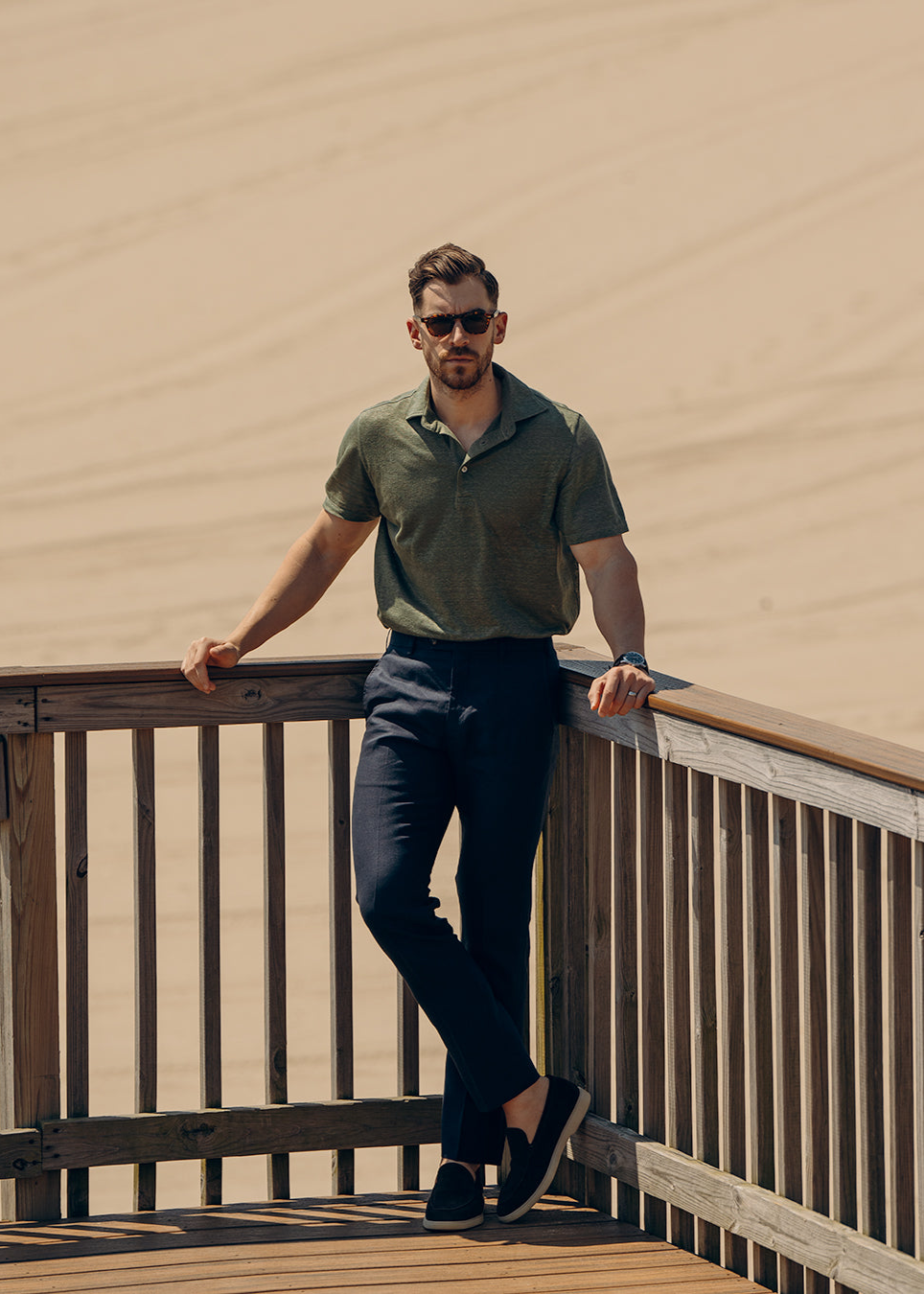

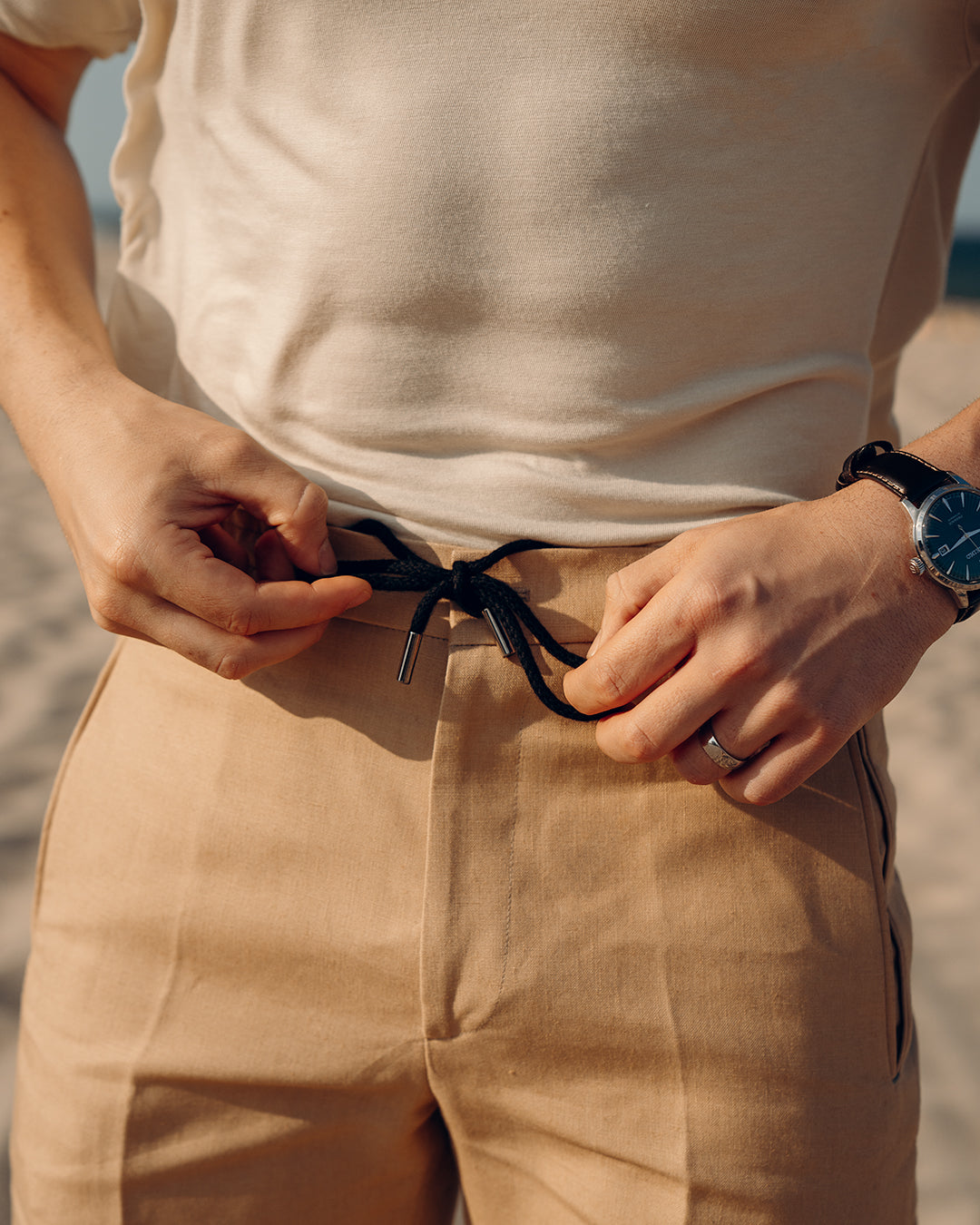

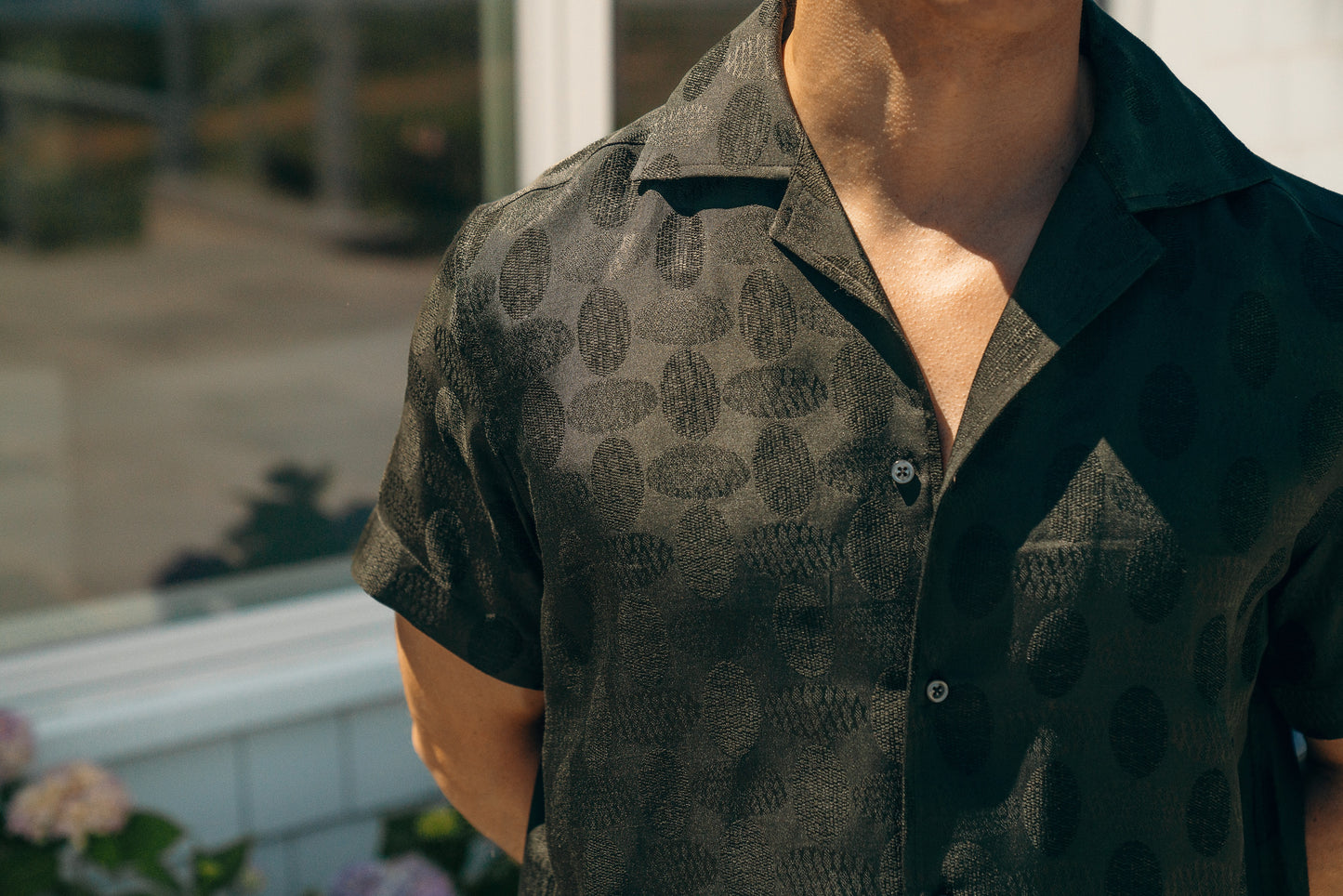


A good sweater should do more than look expensive on a hanger.
It should feel right the second you put it on. It should hold its shape after real wear. It should make the rest of your outfit easier, not fussier. And if you are spending real money on knitwear, it should earn its place in your closet for more than one season.
That is where the cashmere vs wool question gets interesting.
Most men know cashmere is soft. Most know wool is warm. But those two facts barely scratch the surface. The better question is not simply, “Which one is better?” It is, “Which one is better for how I actually dress?”
Cashmere and wool can both be excellent. They can also both disappoint when the fiber, knit, weight, or construction is wrong. A lightweight cashmere tee is not trying to do the same job as a dense wool polo. A cashmere scarf does not need the same structure as a wool knit jacket. A fine-gauge sweater made for layering should not be judged by the same standard as something built for cold weather.
At Wolf Vs Goat, fabric is not treated like a footnote. It is the starting point. The Luxury Fabrics section includes cashmere, wool, linen, silk, and luxury cotton because each material has a different job to do. This guide focuses on two of the most important cold-weather and year-round luxury fibers: cashmere and wool.
Cashmere vs Wool: The Simple Difference
Cashmere comes from the soft undercoat of cashmere goats. Wool is a broader category that usually refers to fibers from sheep, though there are many different types, grades, and finishes.
That matters because the feel, warmth, and performance of a garment depend on more than the word printed on the label. Fiber quality, yarn thickness, knit tension, finishing, and garment construction all play a role.
In simple terms, cashmere is prized for softness, lightness, warmth, and a more luxurious hand feel. Wool is valued for structure, resilience, warmth, and versatility across different weights and knit types.
Neither is automatically better. A great wool sweater can outperform a weak cashmere sweater. A well-made cashmere piece can feel softer, warmer, and more refined than ordinary wool. The label tells you the category. The garment tells you the truth.
Is Cashmere Warmer Than Wool?
Cashmere is often warmer than standard sheep’s wool by weight. That is one reason it has such a strong reputation: it can feel incredibly light while still providing real insulation.
This makes cashmere especially useful when you want warmth without bulk. A cashmere crewneck can sit under a coat without making your shoulders feel stuffed. A cashmere scarf can keep your neck warm without feeling heavy. A cashmere beanie can add insulation without the roughness some people associate with traditional wool.
The Cashmere Collection is the natural place to start if softness and lightweight warmth are your priorities, especially for sweaters, scarves, beanies, and cashmere-blend layers.
Wool, however, has its own advantages. Depending on the yarn and knit, wool can provide more structure, more durability, and a cleaner shape. A wool polo, wool cardigan, or heavier wool sweater can hold a silhouette in a way ultra-soft cashmere sometimes does not.
Choose cashmere when you want lightweight warmth and softness. Choose wool when you want warmth with more structure and everyday resilience. Choose a cashmere blend when you want some of cashmere’s softness with added stability or easier wear.
Which Feels Softer?
Cashmere usually wins on softness.
That soft, almost brushed feeling is the reason many people buy their first cashmere sweater and immediately understand why the material has a reputation. It feels less scratchy than many traditional wools and is often easier to wear directly against the skin.
That said, not all wool is rough. Fine merino wool, high-quality lambswool, and carefully finished wool knits can feel smooth, breathable, and comfortable. The old idea that wool always itches is outdated. Poor wool can itch. Good wool often does not.
The real difference is character. Cashmere feels plush, warm, and indulgent. Wool can feel clean, dry, springy, structured, or dense, depending on the type.
For pieces worn close to the skin, such as a knit tee, lightweight polo, or scarf, cashmere and cashmere blends make a lot of sense. For pieces where shape and structure matter more, wool can be the better choice.
Which One Lasts Longer?
This is where wool often has the advantage.
Cashmere is luxurious, but it is also delicate compared with many wool fabrics. The very softness that makes cashmere appealing can also make it more prone to pilling, stretching, or surface wear if the yarn is low quality or the garment is treated carelessly.
Wool tends to be more resilient. It can recover better from wear, hold shape well, and handle a broader range of garment types. That makes wool especially strong for polos, heavier knits, outer layers, and pieces that see frequent rotation.
But durability is not only about fiber. It is also about construction. A dense cashmere knit will usually perform better than a loose, flimsy cashmere knit. A cheap wool sweater can lose shape faster than a well-made cashmere piece. Stitching, seams, yarn quality, and finishing all matter.
Luxury knitwear should not feel disposable. Whether you choose cashmere or wool, the goal is the same: buy fewer pieces that you actually want to wear.
Cashmere vs Merino Wool
Merino wool deserves its own mention because it is one of the most wearable wool types for men.
Merino is known for being finer and softer than many traditional wools. It can be breathable, temperature-regulating, and comfortable across multiple seasons. That makes it useful for knit polos, lightweight sweaters, base layers, and travel-friendly pieces.
Cashmere feels more plush and luxurious. Merino often feels cleaner, smoother, and a little more performance-oriented.
If you want a sweater that feels indulgent, cashmere is hard to beat. If you want a knit that can handle frequent wear, travel, and shifting temperatures, merino wool or a high-quality wool knit may be the better call.
For many wardrobes, the answer is not cashmere or wool. It is both.
When Cashmere Makes the Most Sense
Cashmere is ideal when softness and elevated comfort are the priority. It works especially well for crewneck sweaters, turtlenecks, scarves, beanies, lightweight layering pieces, cashmere-blend tees, polos with a softer hand feel, and cold-weather accessories.
Cashmere also shines when the outfit is simple. A great cashmere sweater does not need much help. Wear it with tailored trousers, denim, chinos, or under a coat, and it immediately makes the outfit feel more considered.
That is the point of good luxury clothing. It should not require overstyling.
Cashmere is also a strong choice if you are building a wardrobe around touch. Some garments look nice but feel forgettable. Cashmere creates a physical reason to reach for the piece again and again.
If you are comparing first purchases, start with the Cashmere Collection for sweaters and soft layers, or browse Accessories for cashmere scarves and beanies that add warmth without changing your whole outfit.
The tradeoff is care. Cashmere rewards better habits. Fold it instead of hanging it. Let it rest between wears. Wash it carefully. Use a sweater comb when needed. Store it properly.
When Wool Makes the Most Sense
Wool is the better choice when you want structure, resilience, and versatility.
It works especially well for knit polos, raglan sweaters, cardigans, heavier cold-weather knits, layering pieces, wool tees, tailored knitwear, and outerwear-adjacent styles.
Wool has a different kind of confidence. It can look polished without feeling precious. It is often better for pieces that need to maintain shape or carry a sharper silhouette.
A wool polo, for example, can feel more refined than a standard cotton polo while still being wearable. A wool sweater can sit neatly over a shirt. A wool knit can bridge casual and dressed-up outfits without looking forced.
The Wool Collection is a strong place to look if you want knitwear that feels elevated but still has the structure for regular wear.
Wool also has excellent seasonal range. Lightweight wool can work in mild weather. Heavier wool belongs in fall and winter. The right wool knit can be practical, elegant, and surprisingly easy to wear.
For men who want luxury without babying every garment, wool is often the smarter foundation.
What About Cashmere Blends?
Cashmere blends can be excellent when they are done with purpose.
A cotton-cashmere blend can make a sweatshirt, hoodie, shirt, or tee feel softer and more elevated without becoming too delicate. A cashmere-silk blend can create a smoother, lighter, more refined hand feel. A wool-cashmere blend can balance structure and softness.
The key is intent. A good blend should make the garment better. It should not be a way to sprinkle the word “cashmere” into a product description without delivering real value.
Ask what the blend is trying to accomplish: more softness, better shape retention, more breathability, a lighter feel, a smoother drape, or a better year-round weight. When the answer is clear, blends can be some of the most useful pieces in a wardrobe.
For softer everyday pieces that still need stability, the Luxury Cotton Collection can be useful because cotton-cashmere and other premium cotton blends bridge comfort, softness, and day-to-day wear.
Which Is Better for Everyday Wear?
For everyday wear, wool usually has the edge.
That does not mean cashmere should sit untouched in a drawer. It means wool generally handles repetition better. If you are buying one knit to wear constantly, especially in a work-travel-dinner-weekend rotation, wool is often the safer choice.
But if your everyday wardrobe already has reliable basics, cashmere brings something different. It adds softness, warmth, and understated luxury. It makes the ordinary feel more intentional.
A practical approach: start with wool for durable rotation pieces, add cashmere for softness and elevated layering, and use blends for comfort pieces that still need structure. That gives you the best of each fabric instead of forcing one material to do every job.
If you want to see which fabrics are already working across the brand’s most popular pieces, browse the Best Selling collection before deciding what belongs in your own rotation.
Which Is Better for Travel?
Wool is often better for travel because it resists looking tired and can work across different temperatures. A wool knit polo or sweater can be dressed up or down, packed carefully, and worn more than once.
Cashmere can travel well too, especially in scarf, beanie, or lightweight sweater form. It is excellent on planes because it provides warmth without bulk. But it needs a little more care in a bag. You do not want it crushed under shoes, snagged by zippers, or stretched on a hotel hanger.
For a long weekend, pack one wool knit and one cashmere accessory or sweater. That combination covers comfort, polish, and warmth without overpacking.
Which Looks More Luxurious?
Cashmere tends to communicate luxury through softness and subtle texture. Wool communicates luxury through structure, drape, and finish.
A cashmere turtleneck looks relaxed but expensive. A wool polo looks sharp but not stiff. A cashmere scarf adds softness around the face. A wool cardigan can frame an outfit with more shape.
The better-looking option depends on the rest of your wardrobe. If you wear a lot of denim, chinos, soft trousers, and relaxed outerwear, cashmere can make the look feel warmer and more refined. If you prefer sharper lines, polos, tailored trousers, and cleaner silhouettes, wool may fit your style more naturally.
Luxury is not just softness. It is appropriateness. The best fabric is the one that supports the way the garment is supposed to sit, move, and age.
How to Choose Between Cashmere and Wool
Choose cashmere if you want the softest possible hand feel, lightweight warmth, a refined sweater or accessory, comfort against the skin, or a piece that feels special without looking loud.
Choose wool if you want better structure, more frequent wear, a cleaner silhouette, a knit polo or tailored sweater, a practical cold-weather layer, or a versatile piece for work, dinner, and travel.
Choose a blend if you want softness with stability, a more casual luxury piece, comfort in tees, hoodies, polos, or shirts, a fabric that bridges seasons, or a slightly easier entry point into luxury fibers.
The best wardrobes usually include all three.
How to Care for Cashmere and Wool
Good knitwear does not need complicated care, but it does need attention.
Do not wash luxury knits after every wear unless they truly need it. Let them air out. Fold them instead of hanging them. Avoid high heat. Store them clean. Use a proper sweater comb for light pilling.
For cashmere, be especially gentle. Hand washing or delicate washing with the right detergent is usually safest, but always follow the garment’s care label. Reshape while flat and let it dry naturally.
For wool, avoid aggressive agitation and heat. Wool can shrink or felt when treated carelessly. Again, the care label wins.
The goal is simple: protect the fiber, preserve the shape, and keep the garment in rotation for years.
Is Cashmere Worth It?
Cashmere is worth it when you value softness, warmth, and the feeling of wearing something genuinely elevated.
It is not worth it if you want a garment you can throw around without thinking. It is also not worth it if the cashmere is thin, loosely knit, or clearly made to hit a price point rather than a quality standard.
Good cashmere should feel like a long-term wardrobe piece, not a fragile novelty. If you are buying your first cashmere item, start with something you will use often: a crewneck, scarf, beanie, or polo. Avoid buying based only on the word cashmere. Look at the full garment.
Is Wool Worth It?
Wool is absolutely worth it if you care about structure, versatility, and long-term wear.
A strong wool knit can become one of the most reliable pieces in your wardrobe. It can replace a sweatshirt when you want to look more composed. It can make a simple outfit feel finished. It can move from work to dinner without feeling overdressed.
Wool also offers range. It can be fine and smooth, dense and warm, light and breathable, or substantial and rugged. That versatility is why wool remains one of the most important materials in menswear.
The Best Answer: Build Around Use, Not Hype
Cashmere gets more attention. Wool often does more work.
That is the honest answer.
If you want the softest, warmest, most luxurious feel, buy cashmere. If you want structure, versatility, and frequent wear, buy wool. If you want comfort with a little more practicality, look at thoughtful blends.
A well-built wardrobe does not chase one fabric. It uses the right fabric in the right place. Cashmere for softness. Wool for structure. Blends for balance.
That is how you buy knitwear that feels good now and still makes sense years from now. Browse Shop All to compare current pieces across fabrics, or join the Rewards Program if you want more value from building your Wolf Vs Goat wardrobe over time.
Frequently Asked Questions
Is cashmere better than wool?
Cashmere is softer and often warmer by weight, but wool is usually more structured and durable. Cashmere is better for softness and lightweight warmth. Wool is better for frequent wear and cleaner shape.
Does cashmere pill more than wool?
Cashmere can pill, especially softer or looser knits. Pilling is not always a sign of poor quality, but excessive pilling can suggest weak yarn or loose construction. Use a sweater comb and avoid heavy friction.
Is merino wool better than cashmere?
Merino wool is often better for frequent wear, travel, and temperature regulation. Cashmere is better when softness and luxury feel are the priority.
Can you wear cashmere every day?
You can, but it is best to let cashmere rest between wears. Rotating pieces helps preserve shape and reduce wear.
What is the best first luxury knitwear purchase?
For most men, a high-quality wool polo, cashmere crewneck, cashmere scarf, or versatile wool sweater is a smart first purchase. Choose the piece that fits your actual routine.
Ready to Choose Better Knitwear?
Start with the fabric that fits your life.
If you want softness, warmth, and understated luxury, explore cashmere. If you want structure, versatility, and everyday polish, look at wool. If you want comfort with balance, consider thoughtful blends across the wider Luxury Fabrics assortment.
The right knitwear should not sit in your closet waiting for the perfect occasion. It should make getting dressed easier every week.