




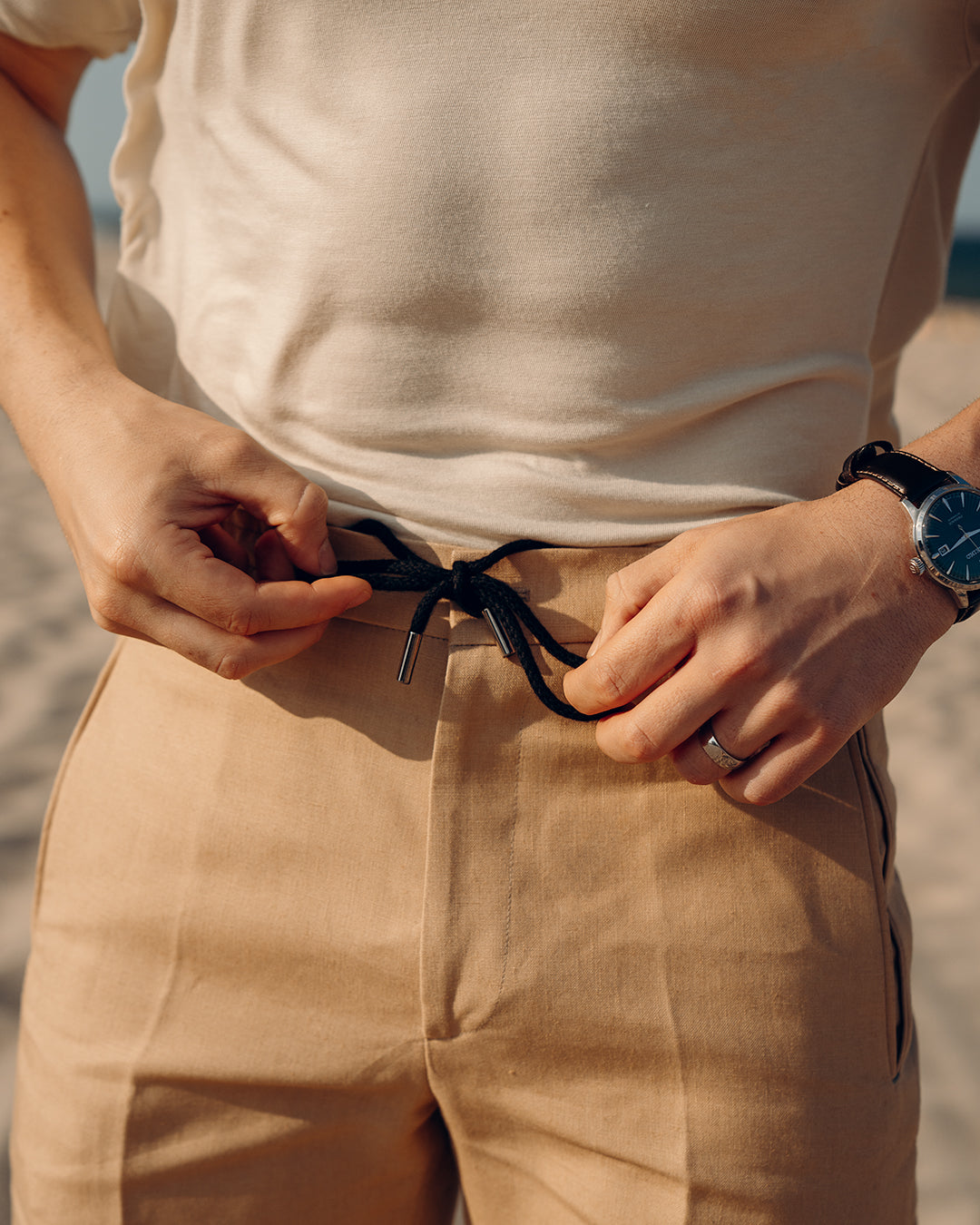

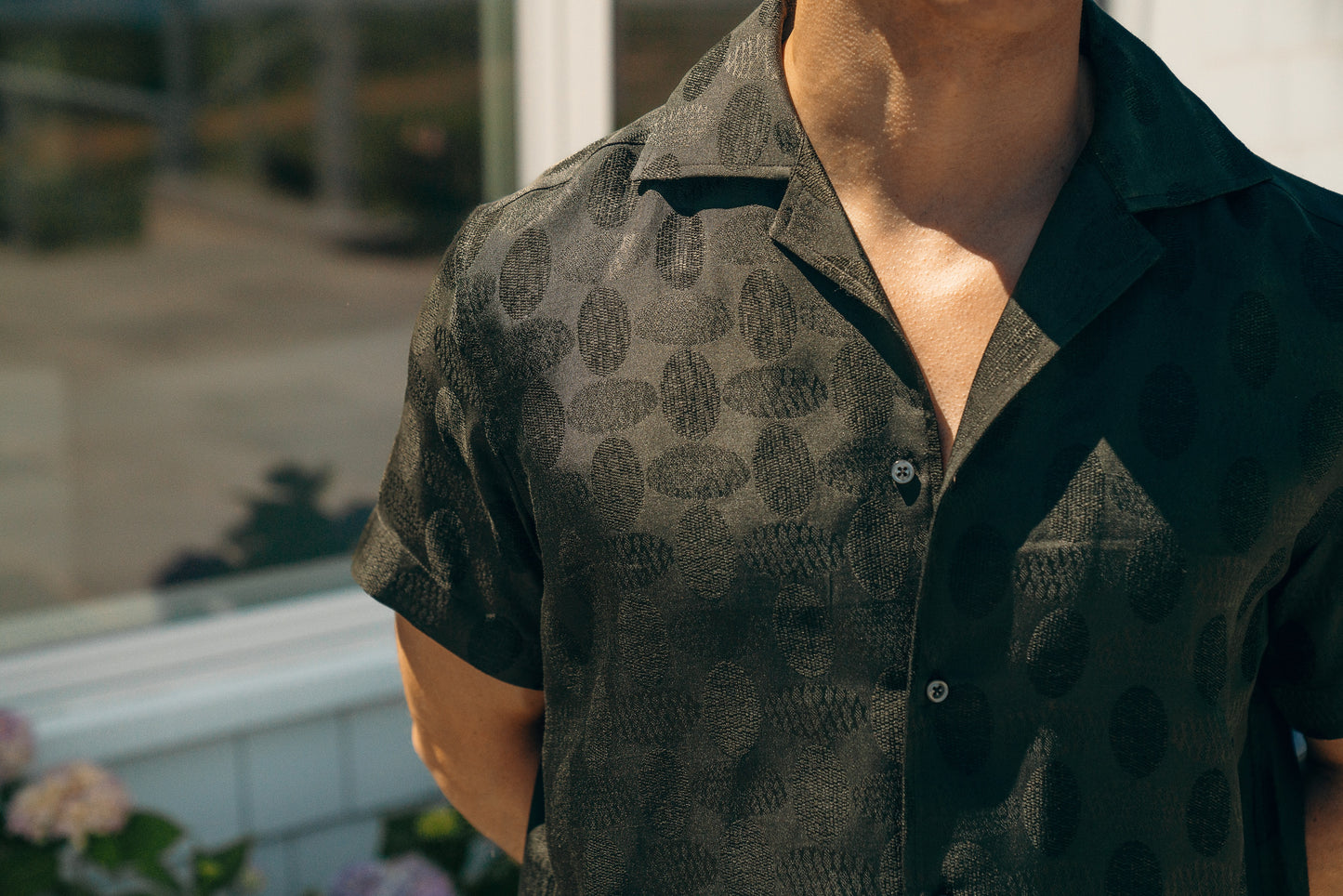


Linen Comes From a Fundamentally Different Fiber
Linen is made from the flax plant, a crop valued for its naturally long and strong fibers. These fibers are significantly longer than cotton, which allows linen yarns to be spun with fewer breaks and less reliance on reinforcement.
This fiber length matters. It is the reason linen garments hold structure over time instead of thinning or collapsing. When linen is well-made, it does not weaken with wear. It relaxes.
Breathability Is Built Into the Fiber Structure
Flax fibers are hollow and rigid, creating natural airflow within the fabric. Heat and moisture move away from the body rather than becoming trapped between skin and cloth.
This is why linen remains comfortable in high heat and humidity, even when layered. It does not cling, insulate excessively, or retain dampness.
Linen Ages Instead of Wearing Out
One of linen’s most defining characteristics is how it changes.
• Initial crispness softens
• Fibers relax without losing strength
• Drape improves with repeated washing
This transformation is gradual and intentional. High-quality linen is designed to be worn often and to improve through use rather than degrade.
Wrinkling Is Not a Defect
Wrinkling in linen reflects fiber integrity, not weakness. Short fibers crease sharply. Long fibers bend.
Luxury linen wrinkles softly and recovers naturally. The movement in the fabric adds depth and texture rather than stiffness.
Linen Rewards Long-Term Ownership
Linen is not designed to look perfect for a season. It is designed to become personal over years of wear. This makes it one of the most honest luxury fabrics available.
Luxury linen is not about perfection out of the box. It is about how a garment evolves with its owner. When made well, linen rewards patience, wear, and care in a way few fabrics can.
Discover Wolf vs. Goat’s luxury linen collection today.