




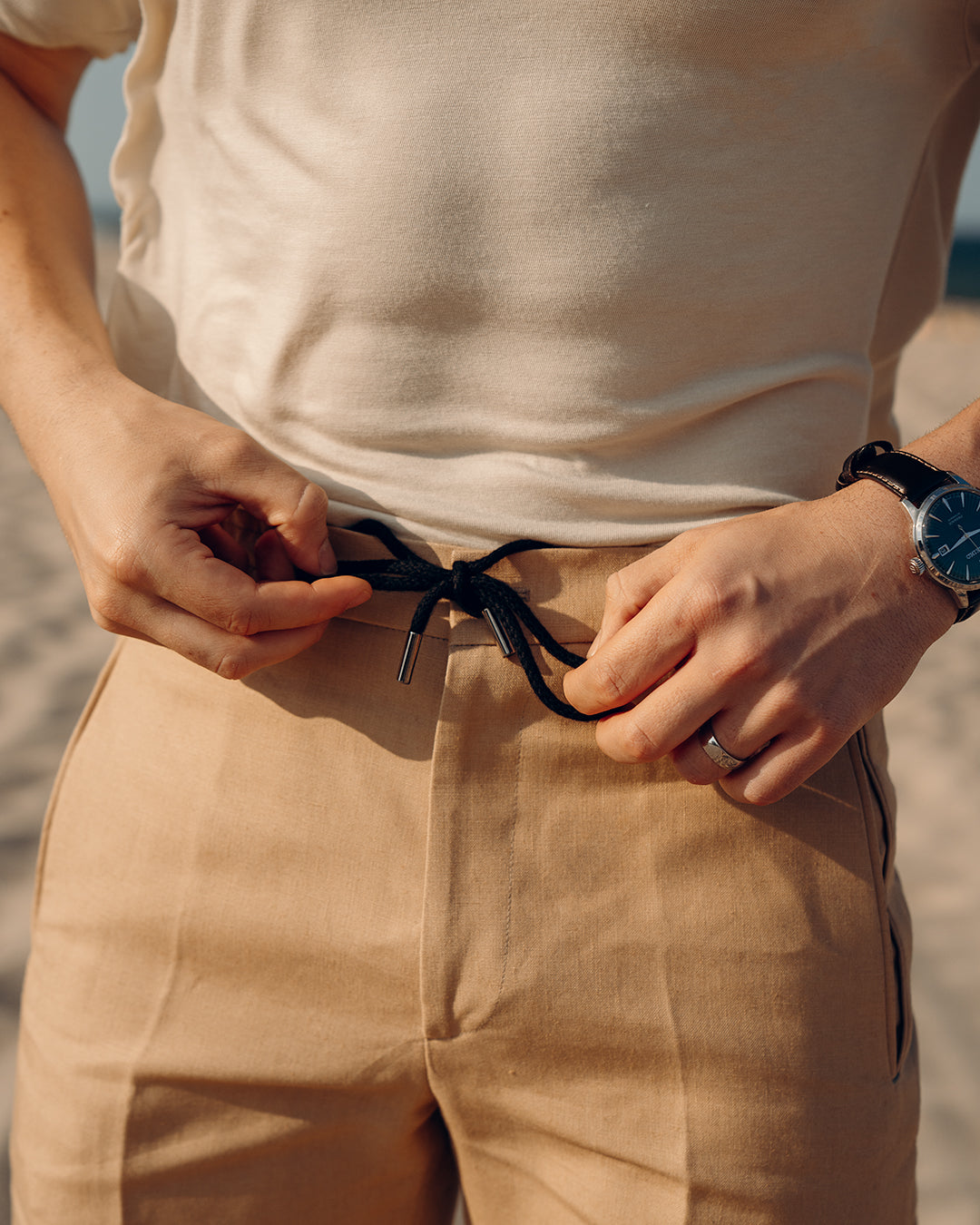



How Great Trousers Are Pressed: Why Pressing Is Part of Construction, Not Just Finishing
Part 4 of The Wolf vs Goat Guide to Menswear
When most people hear the word "pressing," they think of the last thing that happens before a garment is finished.
The trousers are made. Someone presses them. They're inspected, packed, and shipped.
That's not how a properly made pair of trousers is constructed.
At Wolf vs Goat, pressing isn't simply the final step. It's part of the construction process itself.
After pieces are joined, they're pressed appropriately before the next stage of construction begins. That process continues throughout the making of the trouser until the final press at the end.
In other words, we don't make the trousers and then press them.
Pressing is part of how we make the trousers.
Pressing and Ironing Aren't the Same Thing
It's worth making an important distinction.
Pressing a garment during production isn't the same thing as ironing a shirt at home.
Ironing is primarily about removing wrinkles from a finished garment. Production pressing is an operation used throughout garment construction. Depending on the stage, it can flatten or set seams, control fullness, help shape components, and prepare the garment for the operation that follows.
The operator isn't simply running an iron back and forth over the cloth.
They're working with the garment.
Steam, heat, pressure, shaping, cooling, and the characteristics of the fabric all matter.
Press. Construct. Press Again.
A trouser is assembled through a sequence of operations.
Pieces are joined. Seams are sewn. Components are constructed. The waistband is attached.
Throughout that process, the appropriate pressing operation follows the construction work that requires it.
Some seams need to be pressed open. Others require a different treatment because of how they're constructed and what they're supposed to do. There isn't one pressing technique that applies to every seam.
The important thing is that each operation is pressed correctly before the garment moves forward.
Why go through all that trouble?
Because waiting until the end would mean trying to correct everything after the trouser has already been assembled.
We'd rather build it correctly as we go.
The Right Machine for the Right Job
Just as there isn't one stitch used to construct an entire pair of trousers, there isn't one pressing machine that does everything.
Our factory has a range of specialized equipment available, including traditional hand irons, vacuum pressing tables, steam presses, trouser toppers, leg presses, and form-finishing equipment.
Which one gets used depends on the operation and the garment.
Sometimes an experienced operator needs the control of a hand iron.
Another operation may benefit from specialized pressing equipment designed to handle a particular part of the trouser.
The goal isn't to use the most complicated machine.
It's to use the correct technique for the job.
Pressing Is Also About Shape
This is where pressing becomes particularly interesting.
A trouser isn't a flat object.
The human body isn't flat either.
During production, experienced operators use steam, pressure, and manual manipulation to help shape parts of the garment rather than simply flattening them.
Take the waistband.
A waistband needs to follow the body. During pressing, it's shaped accordingly rather than simply being smashed flat on a table.
That distinction might seem insignificant until you wear the garment.
Many of the operations that contribute to a well-made trouser are practically invisible when you look at the finished product. You experience them through the way the garment sits and behaves on the body.
Every Fabric Has to Be Treated Differently
There is no universal pressing recipe.
A wool flannel doesn't respond exactly like a high-twist worsted. Linen doesn't behave like cotton twill.
Different fabrics require different combinations of temperature, steam, pressure, time, and handling.
That's part of the operator's skill.
Before pressing a cloth, you need to understand what you're working with and adjust the process accordingly.
Pressing cloths are also used when appropriate to protect the surface of the fabric, and temperatures are adjusted for the material being handled.
This matters because the goal isn't simply to make the fabric flat.
The goal is to press and shape it without damaging the cloth.
Steam Is Only Part of the Process
Steam is an incredibly useful tool in garment production, but what happens after the steam is also important.
Our factory uses vacuum pressing tables during production.
After steam and heat are applied, the vacuum can draw air through the garment and pressing surface, helping remove residual moisture and heat while the pressed area cools.
Again, this isn't something the customer is likely to see.
But proper pressing is full of operations the customer never sees.
That's part of the point.
What About the Trouser Crease?
The crease is established during the final pressing rather than being progressively set throughout our construction process.
And not every trouser necessarily needs one.
When a crease is appropriate for the style, the final pressing establishes it cleanly and accurately.
But the final press is about more than putting a line down the front of each leg.
The operator is looking at the entire garment.
Are the components lying correctly?
Does anything need attention?
Does the trouser present the way it's supposed to?
The final press gives the garment its clean, polished appearance before inspection, but it can only finish the work that has already been done throughout production.
It can't replace it.
Why the Final Press Can't Fix Everything
This might be the most important point.
A final press can make a well-constructed pair of trousers look beautiful.
It cannot magically turn poorly handled construction into excellent construction.
That's why pressing throughout production matters.
By the time our trousers reach the final pressing station, they've already been pressed repeatedly during their construction. Seams have been treated appropriately. Components have been shaped. Different fabrics have been handled according to their individual requirements.
The final press brings everything together.
It doesn't hide what came before it.
The Wolf vs Goat Philosophy
There are faster ways to make clothing.
You can eliminate operations. You can simplify construction. You can save minutes here and there until those minutes become meaningful savings across thousands of garments.
That's not what we're interested in doing.
Our trouser maker in Southern Italy believes in following every operation required to make the garment properly. Pressing is part of that discipline.
It's repetitive.
It requires skilled operators.
It requires different equipment.
It requires understanding how different fabrics behave.
And much of the work disappears completely inside the finished garment.
But when you put the trousers on, the result is there.
That's one of the recurring themes in quality clothing: some of the most important work is the work you'll never see.
What We're Exploring Next
This article is part of The Wolf vs Goat Guide to Menswear, our ongoing series exploring the craftsmanship, materials, and techniques behind exceptional clothing.
Next: How Trousers Should Fit: Rise, Drape, Break, and Balance Explained
We'll move from the factory to the fitting room and look at what actually happens when you put on a pair of trousers. We'll discuss where trousers should sit, what clean drape really means, how much break you might want at the shoe, and why good fit isn't about making everything as tight as possible.
Most importantly, we'll return to the principle that started this series: balance.